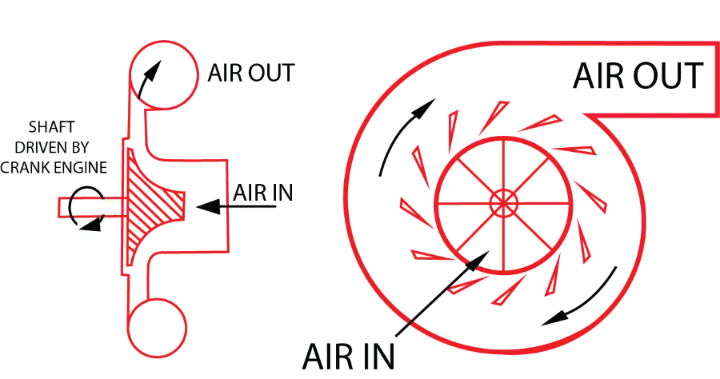
There are three primary types of superchargers used in automotive applications, each with distinct characteristics and performance profiles.
Roots-Type Superchargers
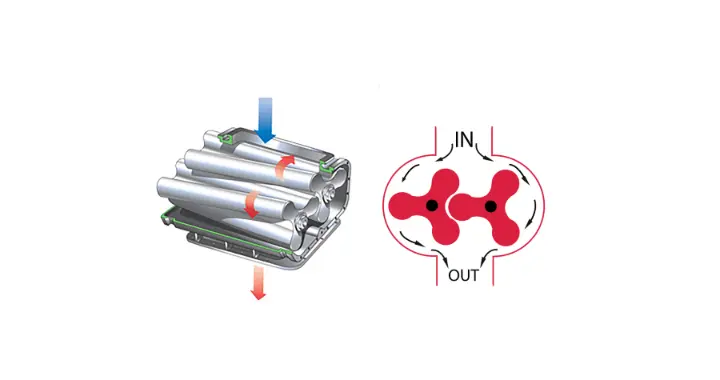
The Roots-type supercharger is the most traditional design, tracing its origins back to 1860 when it was originally invented for mine shaft ventilation. This positive displacement supercharger features two lobes that rotate in opposite directions, capturing air between them and the housing, which allows it to push an increased volume of air into the intake manifold without compressing it.
Roots superchargers are generally mounted directly on top of the engine and are often recognized by the prominent component that sticks out through the hood of many drag racing vehicles. They provide consistent boost throughout the RPM range, but their efficiency tends to decline at higher RPMs compared to other supercharger types, and they can produce a considerable amount of heat.
Twin-Screw Superchargers
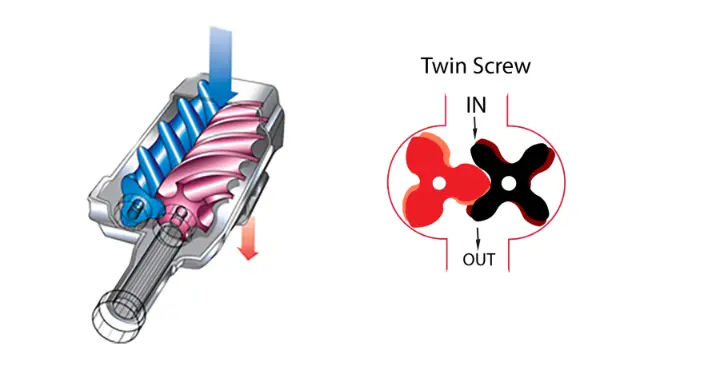
Twin-screw superchargers, also called Lysholm superchargers, function by employing two meshing screws to compress and move air. As the air passes through the narrowing gaps between the screws, it becomes compressed before reaching the intake manifold.
This design provides enhanced thermal efficiency compared to Roots-type superchargers, as the compression happens internally rather than against the pressure in the intake manifold.
Centrifugal Superchargers
Centrifugal superchargers share a similar design with turbochargers but operate through mechanical means rather than utilizing exhaust gases. They function by employing a high-speed impeller that draws in air and forces it outward, effectively converting its velocity into pressure.
Unlike positive displacement superchargers, such as Roots and twin-screw models, centrifugal superchargers generate boost that increases in relation to engine speed. This gradual boost response creates a driving sensation more akin to that of a naturally aspirated engine, with enhanced power available at elevated RPMs. Their compact form allows for simpler installation in tight engine bays, and they typically produce less heat than other types of superchargers.